

In this Article
How Banyule gained a clearer view of wear at Montmorency Park North Oval
Montmorency Park North Oval is more than a field of grass. It is a community asset expected to perform week after week—for training, competition and the changing demands of football and cricket.
At a busy shared-use reserve, protecting the surface is not simply about mowing, watering and responding to visible damage. It is about knowing where pressure is building before a worn patch becomes a costly repair, a player-sOne oval. High demand. No room for guesswork.afety concern or an avoidable interruption to sport.
That was the challenge behind Xvision’s deployment at Montmorency Park North Oval.
The challenge: demand is uneven, but inspections only show part of the picture
Sporting ovals rarely wear evenly.
Goal squares, centre corridors, running lanes, warm-up areas and touchline zones can carry far more traffic than the rest of the field. When teams repeatedly train in the same places, the effects compound: turf thins, the surface loses consistency, and maintenance teams are left reacting after the damage is already obvious.
For grounds staff, that creates a difficult balancing act:
- Keep the oval available for clubs and the community.
- Protect the surface through changing weather and seasonal demand.
- Direct limited maintenance time and budget to the areas that need it most.
- Make decisions that can be clearly explained to facility managers, clubs and players.
For sporting clubs, the outcome is equally practical: a safer, more consistent surface, fewer surprises and a venue that remains fit for competition.
The approach: turn field activity into a maintenance plan
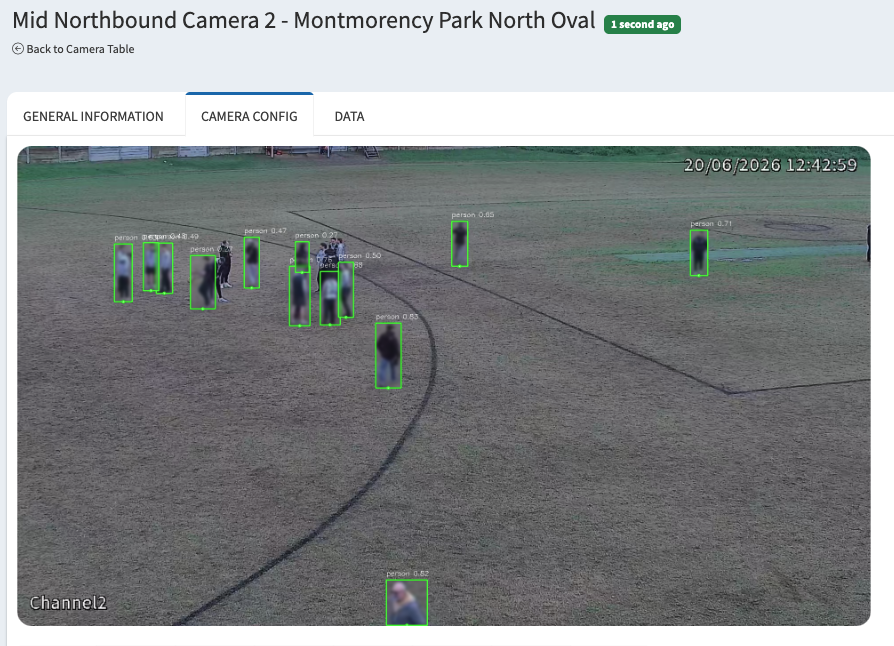
Xvision’s platform gives the team a more objective view of how the oval is being used and how the turf is responding over time.
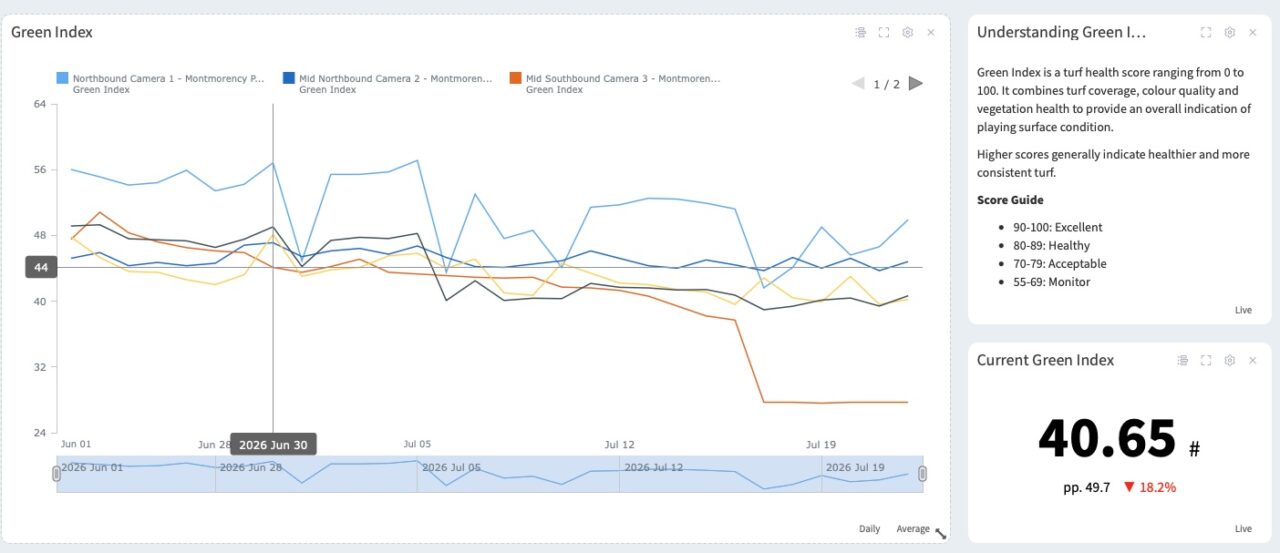
1. Turf health monitoring
The platform tracks visual indicators of turf condition—including colour, coverage and surface consistency—to create a Green Index for the playing surface.
Rather than waiting for a thin or discoloured area to become apparent during an inspection, grounds teams can identify changes early, compare one zone with another and investigate the likely cause.
This is not a replacement for an experienced turf manager. It gives that manager a clearer signal about where to look, what to prioritise and whether the intervention is working.
2. Activity heatmaps
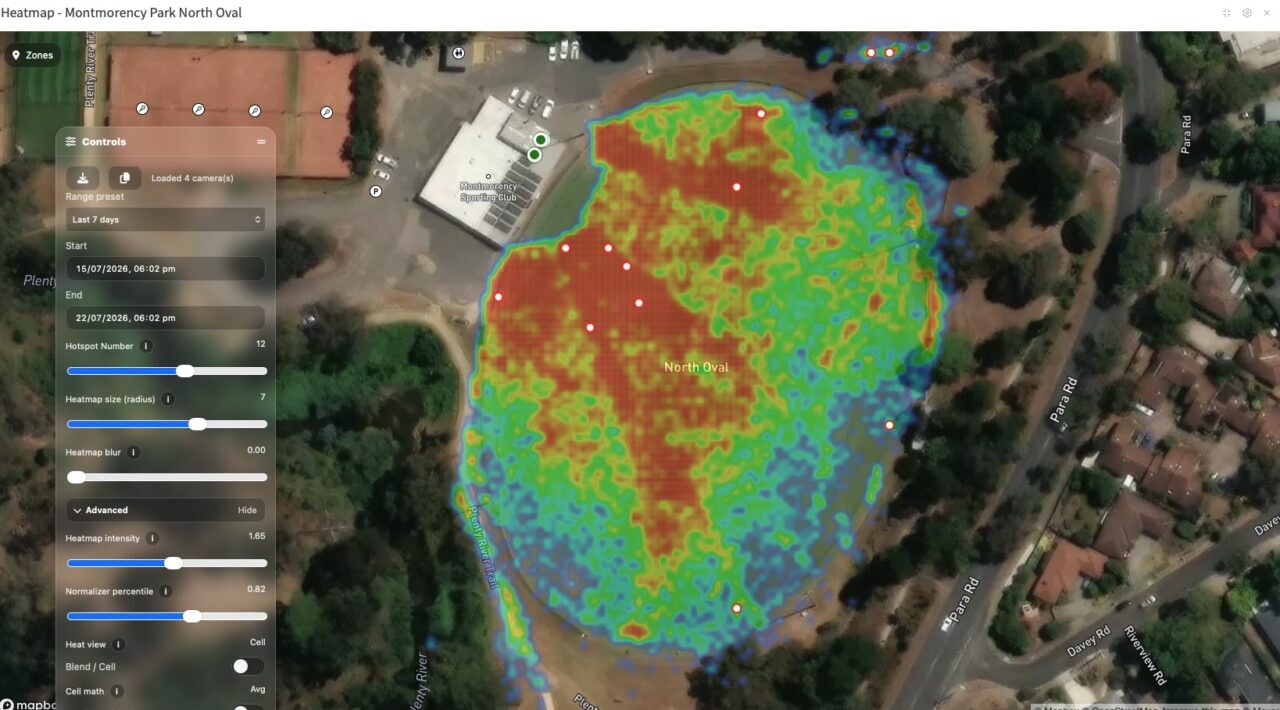
Heatmaps reveal where players and activity are concentrated across the oval.
The insight is simple but valuable: if the same sections of the ground are carrying the heaviest load week after week, training plans can be adjusted before those zones deteriorate. Clubs can rotate drills, vary warm-up locations and protect the areas that are most vulnerable to wear.
That turns a conversation that can otherwise feel subjective—“the goal square is getting hammered”—into a shared view of what is actually happening on the field.
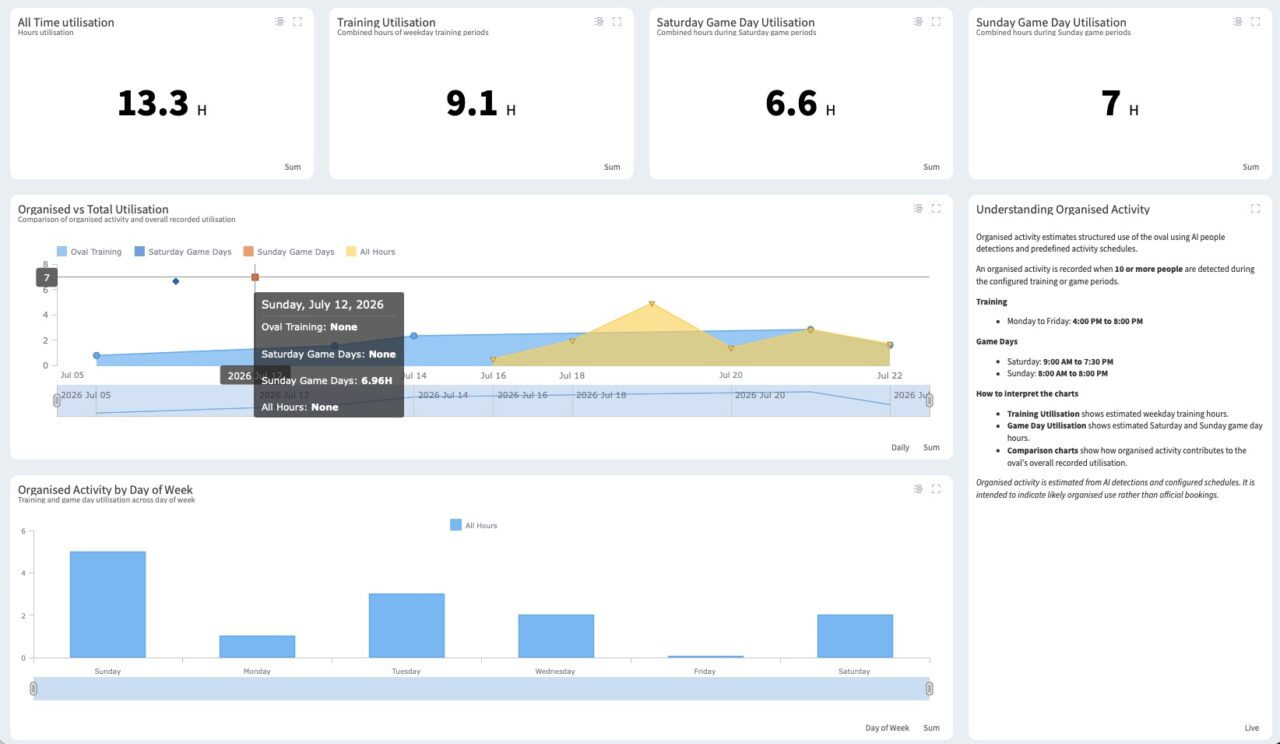
3. Playing-hours tracking
The platform also records field-use hours, providing a clearer picture of cumulative demand.
When use approaches a locally defined threshold, the team can review the forward schedule and decide whether to:
- rotate training activity;
- rest a high-wear area;
- bring forward targeted maintenance;
- adjust irrigation, aeration or renovation priorities; or
- discuss alternative arrangements with clubs before surface quality is compromised.
The key is not a single “safe” number of hours. Every oval, turf profile, season and maintenance program is different. The value is being able to set a practical threshold, monitor it consistently and act before excess use becomes visible damage.
What this means on the ground
For the grounds team, the platform creates a more targeted maintenance workflow. Instead of treating the oval as a single, uniform asset, they can see its most stressed zones and focus labour, water and remediation where they will have the greatest effect.
For clubs and players, it supports a better playing experience. Training and competition can be planned with a clearer understanding of the surface’s capacity, reducing the likelihood that a heavily used area becomes unsafe, uneven or unavailable at the wrong time.
For Council, it provides a more transparent basis for decisions about maintenance, allocations and future investment.
From reactive repairs to better stewardship
The aim is not to restrict sport. It is to keep more sport on a better surface for longer.
Montmorency Park North Oval shows what is possible when field condition and field use are considered together: maintenance teams can spot emerging pressure earlier, clubs can play a role in protecting their venue, and Councils can make decisions with evidence rather than assumptions.
Want to see what this could look like at your reserve?
Request a walkthrough of the Montmorency Park North Oval approach or book a short demonstration with the AlphaX team.
Related Blog Posts

How Smart Cities Connect: Getting Started with Edge AI and IoT Technology
How to Get Started with Edge AI and IoT Technologies in Smart Cities: Overcoming Integration Challenges In recent years, the concept of smart cities has evolved from a futuristic Read More

5 Step Strategy: Ensuring Security and Privacy in 15-Minute Smart Cities
Introduction Ensuring security and privacy in 15-minute smart cities is a critical challenge as urban areas become increasingly connected through IoT and edge AI technologies. These cities aim to Read More

What is a smart city and the challenge of legacy systems
How to Get Started with Integrating Legacy Systems in Smart Cities Smart cities are transforming urban landscapes by leveraging technology to improve the quality of life for residents. However, Read More