Catch unwanted material.
Identify foreign objects and visibly unexpected feed.
 Discuss your application
 CONVEYOR ANOMALY DETECTION
Spot foreign objects, oversized rocks and build-up. Trigger a conveyor stop, material diversion or operator alert before the condition reaches the next stage.
Vision connected to action. Engineered for your plant.

Unwanted material shouldn’t have a clear path into your equipment.
Watch the belt for agreed conditions and intervene upstream. Help protect crushers, avoid blockages and reduce disruption across the process.
Identify foreign objects and visibly unexpected feed.
Flag material that exceeds the agreed size threshold.
Detect accumulation, interruptions and changing material flow.
Combine vision with equipment status. Connect findings directly to PLCs, SCADA or the operator workflow.
Agree the response for each condition: stop, divert or alert. Validate the timing and control behaviour before commissioning.
Conveyor running
SeeOversize condition
ThinkAgreed conveyor-stop signal
ActResponse sequence. Actual controls are agreed and validated for your plant.
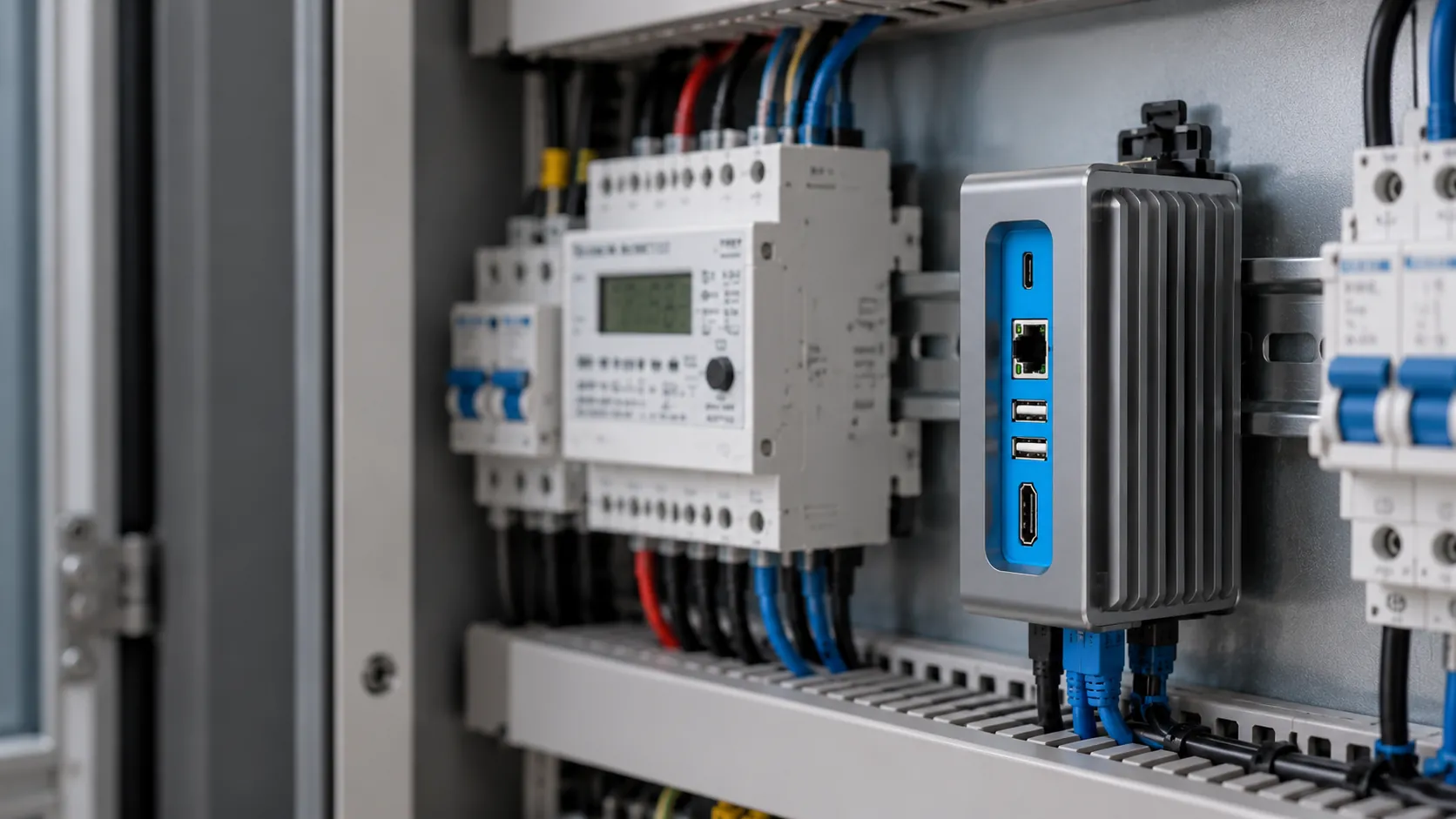
Camera position. Lighting. Belt speed. Material coverage.
We engineer these around the detection task, with processing hardware close to the equipment and interfaces matched to your controls. Additional sensing is assessed where it improves the application.
Start with a discovery call. We define what needs to be caught, the consequences of it passing and the action required, then review available footage and plant interfaces.
Where the application needs testing, we scope a paid assessment before proposing deployment. The scope sets out what will be tested and the acceptance criteria.
Yes, where their view and image quality suit the task.
We test representative material and operating conditions, measure missed detections, unnecessary triggers and response timing, then evaluate in shadow mode before enabling control responses. Results are checked against agreed acceptance criteria.
Detection covers agreed visible conditions. Testing establishes the operating range and limits.
Yes, where that response is engineered and validated for the application. This does not replace certified safety systems.
The agreed scope covers camera and lighting requirements, processing hardware, plant interfaces and commissioning. Operator alerts and any PLC or SCADA control responses are designed and validated for your application.
Handover, support and performance reviews are agreed in the project scope. Changes to material, lighting, belt speed or plant controls may require adjustment and revalidation.